Your laptop is closed, but your desk is still in view. Your reading chair is comfortable, yet it never quite feels separate from everything happening around it. In a studio apartment, your bedroom and living room might be the very same space.
Sometimes, what’s missing is a sense of where one part of the room ends and another begins.
These room divider ideas start with that feeling: giving different parts of your day a setting of their own. A folding screen can introduce a visual boundary while adding another layer of style to your home.
Start with the space you wish you had
Before choosing where to place a divider, think about what you want the room to do.
Would you enjoy a reading corner that feels tucked away? Do you want your workspace to feel distinct from the place where you relax? Would a little separation help your studio feel more intentionally arranged?
Choose one purpose first. That gives you a clear starting point for positioning the divider and deciding which furniture belongs around it.
You’re looking for an arrangement that makes your existing room more enjoyable to use.
Give your work corner an end-of-day boundary
When your desk shares a room with your sofa or bed, work can remain part of the scenery long after you’ve finished.
A folding divider beside the desk can help mark out that work area. Depending on the layout, it may also interrupt the view of your workspace from your usual relaxing spot.
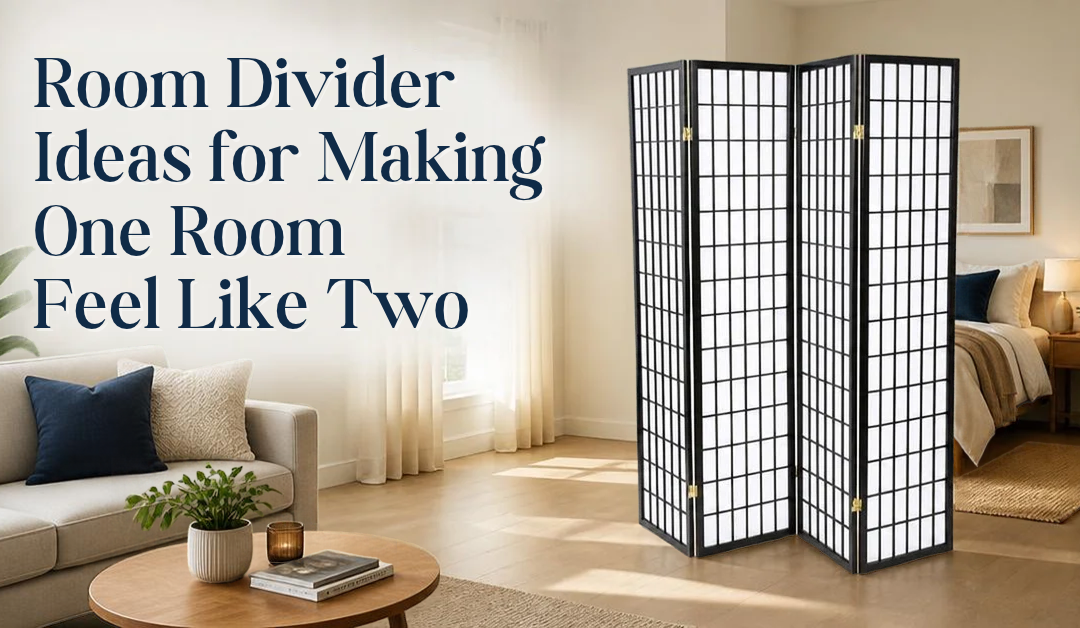
The Sora 4-Panel Shoji Room Divider — Black pairs a black solid wood frame with white cotton-paper screens. Its four folding panels let you angle the screen around the corner you want to define.
Try positioning it along one side of your desk, leaving enough space to move your chair and reach drawers or outlets. Then sit on the sofa and check the view.
That change in perspective can help you find a placement that makes the two areas feel more distinct.
Make a reading nook feel like a destination
A comfortable chair is a good beginning. A few surrounding details can make it somewhere you look forward to spending time.
Start with a light placed for reading and a small surface for your book or cup. Position a divider along one side to give the arrangement a visual edge.
Sora’s Shoji-inspired design adds a decorative backdrop, while its black-and-white palette leaves room for warm wood, textured cushions, and a favorite throw.
Keep the chair easy to enter and leave. You should be able to settle in without moving the screen or squeezing around nearby furniture.
The aim is a corner that invites you to pause.
Suggest separate areas in a studio apartment
In a studio, furniture placement helps establish the room’s different uses.
A divider can reinforce that arrangement. Try it near the transition between your sleeping and living areas, or use it to define a dressing corner beside a wardrobe.
Consider what you see from the entrance, the sofa, and the bed. A screen may create a useful visual break from one angle while getting in the way from another.
Experiment before settling on a location. Leave access to windows, storage, and your usual walking routes.
A decorative screen creates visual separation; it doesn’t provide the sound isolation of a separate room. The effect is about helping each area feel more defined.
Use a room divider as part of your decor
A divider becomes a noticeable part of the room, so connect it with the furnishings around it.
Bring warmth to black and white
Pair Sora’s black frame and white screens with wood furniture, soft upholstery, or woven textures.
A wood side table beside a cushioned chair can make the arrangement feel welcoming. Repeat a color from your throw or cushion elsewhere in the room to tie the spaces together.
Repeat a few black accents
A nearby black lamp, picture frame, or table base can help the divider feel connected to the room.
You don’t need every piece to match. A few repeated details are enough to create a relationship between the screen and the surrounding furniture.
Leave the screen room to be seen
Avoid filling every inch around the divider with accessories.
Its panel design already contributes a pattern and a strong outline. Give it some breathing room so the arrangement feels comfortable rather than crowded.
Measure the arrangement, including the folds
Sora’s listed overall dimensions are 70.25 inches high, 69 inches wide, and 0.75 inches deep.
Those measurements are a starting point. When the panels are angled, the screen occupies more floor depth and spans less width than when extended flat.
Use paper or tape suitable for your floor to map out the area you expect it to occupy. Allow space for the folded arrangement, then walk around it as you normally would.
Check door swings, drawer access, and the room needed for chairs. Also consider whether its position will affect light reaching the area behind it.
A good fit should make the room feel more useful from every side.
Give your room another way to feel like home
The most useful room divider ideas begin with a small wish: somewhere to concentrate, a corner to unwind, or a clearer distinction between the different parts of your day.
Choose the area you want to define. Arrange a few useful pieces around it. Then adjust the screen until the space feels comfortable to use.
Explore the Sora 4-Panel Shoji Room Divider at House Supply Depot and discover another way to make your room feel more yours.